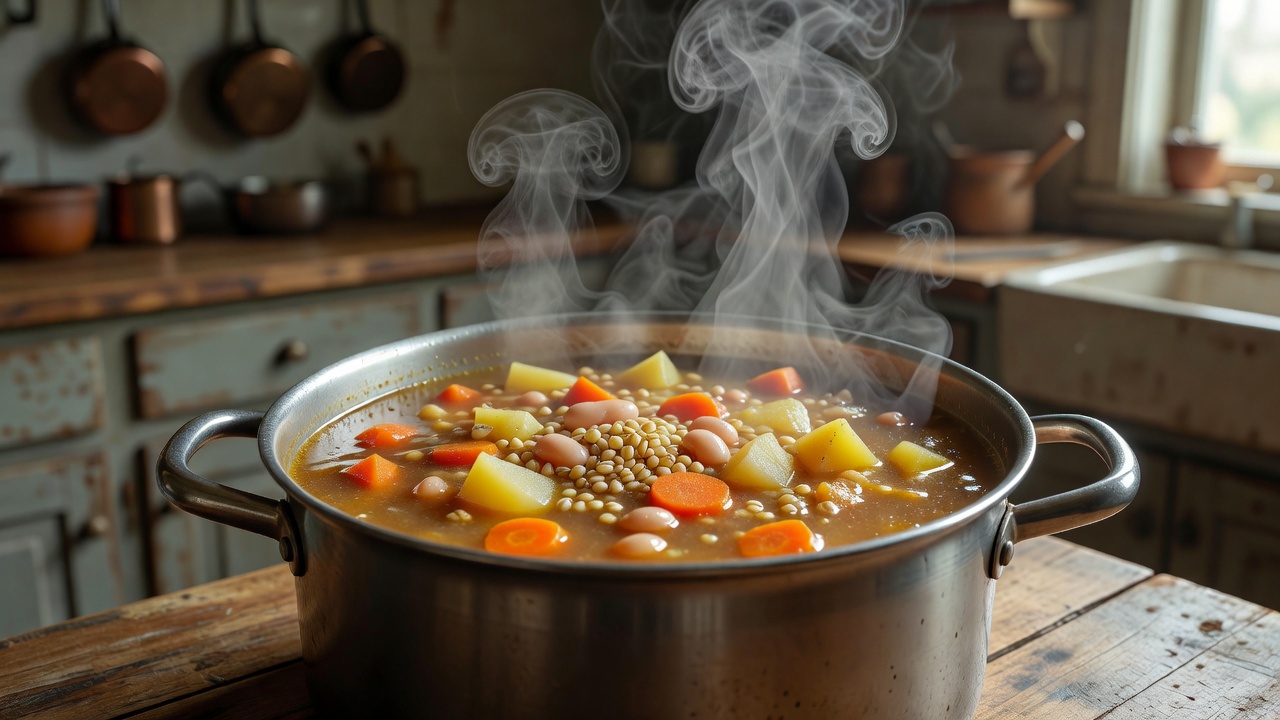
A small set of ingredients, each with a job
This is the kind of soup that should taste of its ingredients rather than a long shopping list. Onion supplies a mellow base. Carrot and swede bring sweetness. Potato makes the broth feel fuller, while pearl barley gives each spoonful a pleasant chew. White beans add substance without needing a separate cooking session.
Grains and roots appear in many northern European kitchens, but that does not make this a single traditional Scandinavian dish. Swedish ärtsoppa is a different soup, usually built around yellow peas. Norwegian fish soups follow other methods again. This recipe borrows a useful cold-weather pantry and turns it into a flexible weekday pot.
Root vegetable, barley and bean soup
Use a large, heavy saucepan with a lid. Cut the roots into roughly 1.5 cm pieces so they soften at a similar pace. The cooking time is a guide: older barley and larger vegetable pieces may need longer.
- Base
- 2 tablespoons rapeseed oil; 1 large onion, finely chopped
- Roots
- 250 g carrots, 250 g potatoes and 200 g swede, prepared and diced
- Grain
- 100 g pearl barley, rinsed
- Broth
- 1.5 litres low-salt vegetable stock, plus extra hot water as needed; 1 bay leaf
- Beans
- 1 × 400 g tin white beans, drained and rinsed
- Finish
- 2 tablespoons chopped dill or parsley; 1–2 teaspoons lemon juice; black pepper and salt to taste
Work through the pot
Tick each step as you cook. These checkmarks stay only while this page remains open.
Change the ingredient, not the purpose
No swede? Use more carrot and potato, or try parsnip for a sweeter result. Celeriac also works, but celery is an allergen and should be named when feeding guests. Turnips can bring a sharper edge; peel any tough outer layer and cut them small.
For a barley-free version, use 100 g rinsed green lentils and begin checking them after 20 minutes. They change the flavor and texture, which is perfectly acceptable. For a gluten-free meal, choose a suitable alternative and check the stock, bread and other packaged ingredients. Barley itself is not gluten-free.
A spoonful of yogurt at serving adds richness, but the soup does not need dairy. An unsweetened plant alternative can play the same role, although its allergens and flavor will depend on the product. Avoid boiling either into the pot: add it to individual bowls instead.
A second bowl tomorrow
Barley keeps absorbing liquid after cooking. A thick pot the next day is normal; loosen only the portion you need with water or stock. Cool leftovers promptly in shallow containers and refrigerate within two hours. Keep the refrigerator at 4°C / 40°F or below, use refrigerated soup within three to four days, and reheat the portion to 74°C / 165°F throughout.
Freeze extra portions promptly rather than waiting until the end of that fridge window. Leave room in the container for expansion and label it with the date. For the best texture, aim to use frozen soup within two to three months. Thaw in the refrigerator, or reheat safely from frozen while stirring thoroughly.
Make this soup the first meal in the five-supper plan, then use the remaining raw roots for a roasting tray. That is the useful kind of repetition: familiar ingredients, a different supper.