Think in textures, not rules
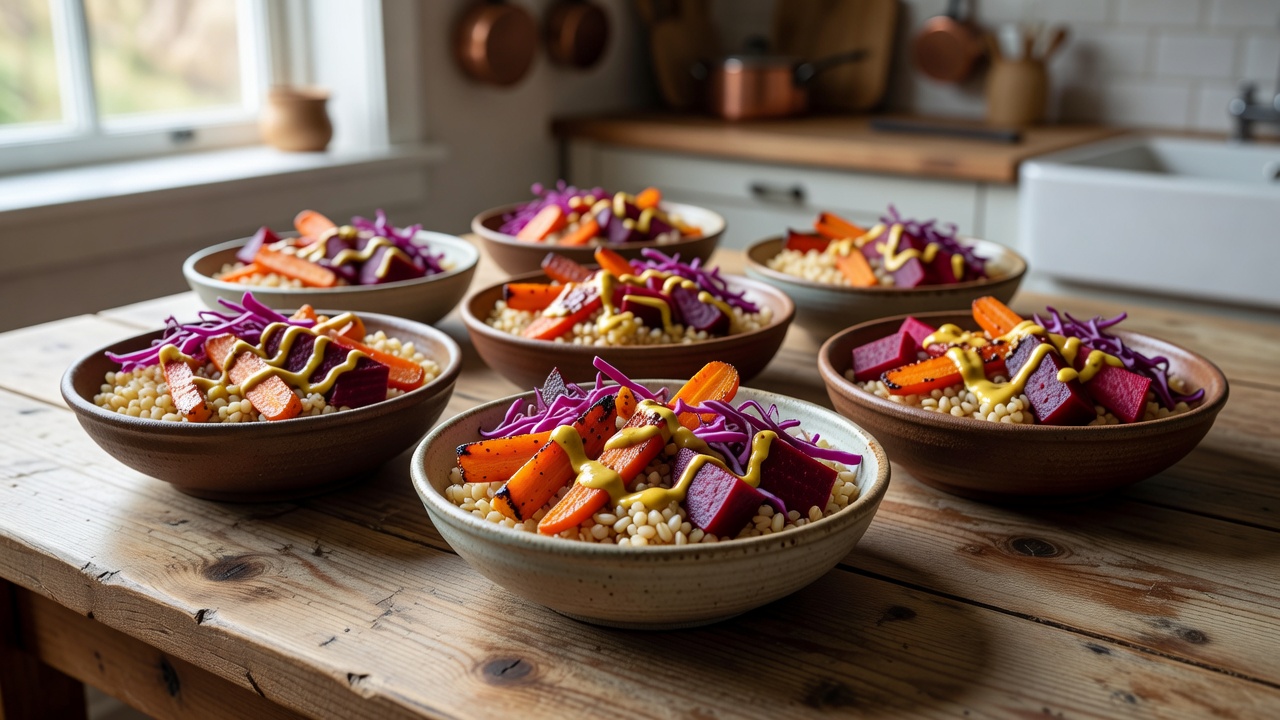
A satisfying bowl needs contrast. Roasted roots give sweetness and tender centers. Barley provides chew, shredded cabbage brings crunch, and a mustard dressing adds the sharpness that stops the meal feeling heavy. Beans turn it into a more substantial supper without demanding another pan.
Rye and barley have long histories across northern Europe, but the breads and meals built around them differ. Danish rugbrød is not interchangeable with every light rye loaf. Swedish knäckebröd brings an entirely different texture. Finnish ruisleipä belongs to Finland’s own food traditions; Finland is Nordic but is not usually included in the narrower geographical meaning of Scandinavia. Those distinctions are worth keeping, even in a flexible home kitchen.
Roasted roots with barley and mustard
Cook the barley while the oven works. Beetroot can stain the other vegetables; place it at one end of the tray or use a separate small tray if you want distinct colors. There is no need to do this for flavor.
- Roots
- 800 g mixed carrots, parsnips and beetroot, cut into even 2 cm pieces
- For roasting
- 2 tablespoons rapeseed oil; black pepper and a small pinch of salt
- Grains
- 200 g dry pearl barley, rinsed
- Body & crunch
- 1 × 400 g tin white beans, drained; 200 g finely shredded cabbage
- Dressing
- 2 tablespoons rapeseed oil, 1 tablespoon lemon juice, 2 teaspoons wholegrain mustard and 1 tablespoon water
- Finish
- 4 tablespoons plain yogurt, optional; chopped parsley or dill
Bring the bowls together
Keep the shape of the meal when swapping
Use buckwheat groats or brown rice instead of barley if that is what you have. Follow the packet’s cooking method rather than borrowing barley’s timing. For a gluten-free meal, choose suitable labeled products and check the mustard and other additions. Both rye and barley contain gluten.
Swap the beans for cooked lentils, or serve a freshly cooked egg alongside. Pumpkin seeds add crunch but are not a direct replacement for the beans’ role in making a filling meal. If mustard is unsuitable because of an allergy, leave it out and use lemon, oil and chopped herbs; the dressing will be thinner but still useful.
Make a slice of rye do more
For an easy open sandwich, mash drained white beans with a little oil, lemon and pepper. Spread them over a slice of sturdy rye, then add sliced roasted roots and a small spoonful of chopped pickle. A little cabbage on top gives crunch. If the bread is very dense, cut smaller slices and offer two rather than building one unwieldy tower.
Danish smørrebrød is an established open-sandwich tradition, with its own combinations and conventions. This bean-and-root version is an everyday adaptation, not a replacement definition. Likewise, crispbread can carry the same toppings, but it is best assembled just before eating so that it keeps its snap.
Save components, not a soggy bowl
Store cooked grains, roasted vegetables, dressing and raw cabbage separately where possible. Cool the cooked components promptly and refrigerate within two hours at 4°C / 40°F or below. Use within three to four days, or freeze suitable portions promptly. Reheat cooked leftovers to 74°C / 165°F throughout; add raw cabbage after reheating.
Slice extra bread before freezing so that you can take out only what is needed. Save a few raw roots for the soup pot instead of roasting everything at once. Small decisions like these make repeated ingredients feel helpful rather than repetitive.