Plan connections, not a rigid performance
This plan is a starting point for four people at supper, not a complete dietary program. Appetites, budgets and household needs vary. Add fruit, vegetables, bread or other accompaniments as useful, and scale quantities after seeing what your household actually eats. Breakfasts and lunches are not included.
The aim is to share ingredients while cooking each meal in a sensible order. Raw cabbage lasts longer than a dressed salad. Whole roots give you more flexibility than five containers of pre-cooked food. Frozen fish can wait until its evening, provided you leave enough time to thaw it safely.
The market basket
Check your cupboard before shopping. These amounts are a practical guide for the five suppers below, with a little flexibility for trimming and larger appetites. Tin sizes refer to the full labeled weight before draining.
- Roots
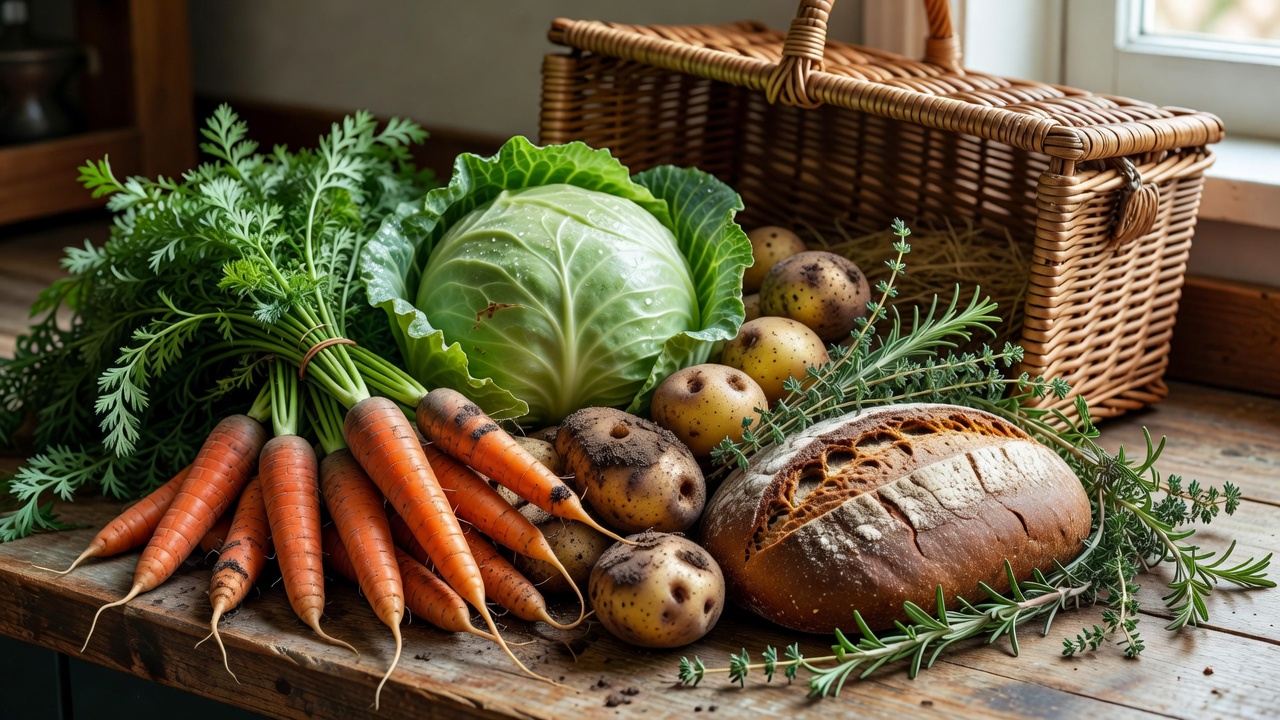
- About 2.5 kg potatoes; 1 kg carrots; 200 g swede; 600 g mixed beetroot and parsnips
- Vegetables
- 1 large cabbage, about 1.2 kg; 3 medium onions; 2 lemons; a bunch of dill or parsley
- Grains & bread
- 300 g dry pearl barley; 1 loaf sturdy rye bread
- Beans
- 4 × 400 g tins white beans; add another tin if replacing the eggs
- Fish & eggs
- 4 white fish fillets, about 150 g each; 8 eggs, or extra beans for Friday
- Chilled
- 300 g plain yogurt, or a suitable unsweetened alternative
- Cupboard
- Rapeseed oil, low-salt vegetable stock, mustard, bay leaf, pickles, salt and black pepper
Five evenings, five different plates
Monday: a pot of root and barley soup
Follow the root vegetable soup using 100 g barley, one tin of beans, 250 g each of carrots and potatoes, and the swede. Serve bread if wanted. Leave the rest of the roots raw for now. Freeze any unwanted extra soup promptly instead of assuming it must become tomorrow’s dinner.
Tuesday: roasted-root grain bowls
Use the remaining 200 g barley for the warm grain bowls. Roast 800 g mixed roots, drawing from the carrots, beetroot and parsnips. Add one tin of beans and about 200 g shredded cabbage. If you roast extra vegetables for Thursday, set the extra portion aside before serving and refrigerate it promptly.
Wednesday: fish, potatoes and dill
Make the baked fish supper with 900 g potatoes and about 400 g cabbage. Move frozen fish into the refrigerator early enough to thaw according to its packaging. Keep some yogurt and herbs separate for Thursday rather than letting utensils used near raw fish touch them.
Thursday: loaded rye and a crunchy side
Mash one tin of beans with oil and lemon. Spread onto rye, then top with Tuesday’s safely stored roasted roots and a little chopped pickle. Shred fresh cabbage for a side salad. No roasted roots left? Pan-cook thin carrot slices until tender, or use grated raw carrot for a fresher version.
Friday: potato and cabbage skillet
Dice about 1 kg potatoes and simmer until just tender, then drain. Soften a sliced onion in oil, add the remaining cabbage and a splash of water, and cook until tender. Stir in the potatoes and one tin of drained beans; heat thoroughly. Serve with fully cooked eggs, or use another tin of beans instead. Any unused raw roots can join the skillet if cut small and cooked until tender.
Follow the season where you live
For autumn, use carrots, beetroot, cabbage and the first good storage potatoes. In winter, lean on swede, parsnip, onions and frozen vegetables when fresh choices are limited. These are practical routes, not a promise that every ingredient is local in every Nordic region throughout the season.
In spring, replace part of the cabbage with leeks or leafy greens, cooking them for less time. In summer, serve the grains less hot and add peas, cucumber or fresh herbs. Do not simply swap a quick-cooking green into a long-roasting step: keep its role in the meal, but change its method.
Make storage part of the plan
Keep the refrigerator at 4°C / 40°F or below. Refrigerate perishable cooked food within two hours in shallow containers, use within three to four days, and reheat cooked leftovers to 74°C / 165°F throughout. Tuesday’s extra roots fit Thursday’s meal when handled correctly; a Sunday batch should not simply sit in the refrigerator until Friday.
Label containers and freeze portions you will not use in time. Store raw fish securely below ready-to-eat food and follow its use-by and thawing instructions. Freeze sliced rye bread if you will not finish it fresh. Keep raw cabbage dry and undressed until needed, trimming damaged outer leaves.
For reference on storage and handling, see FoodSafety.gov’s cold food storage charts. Local official guidance and product instructions should also inform your decisions. A meal plan is useful only when it works safely with the food and equipment you actually have.