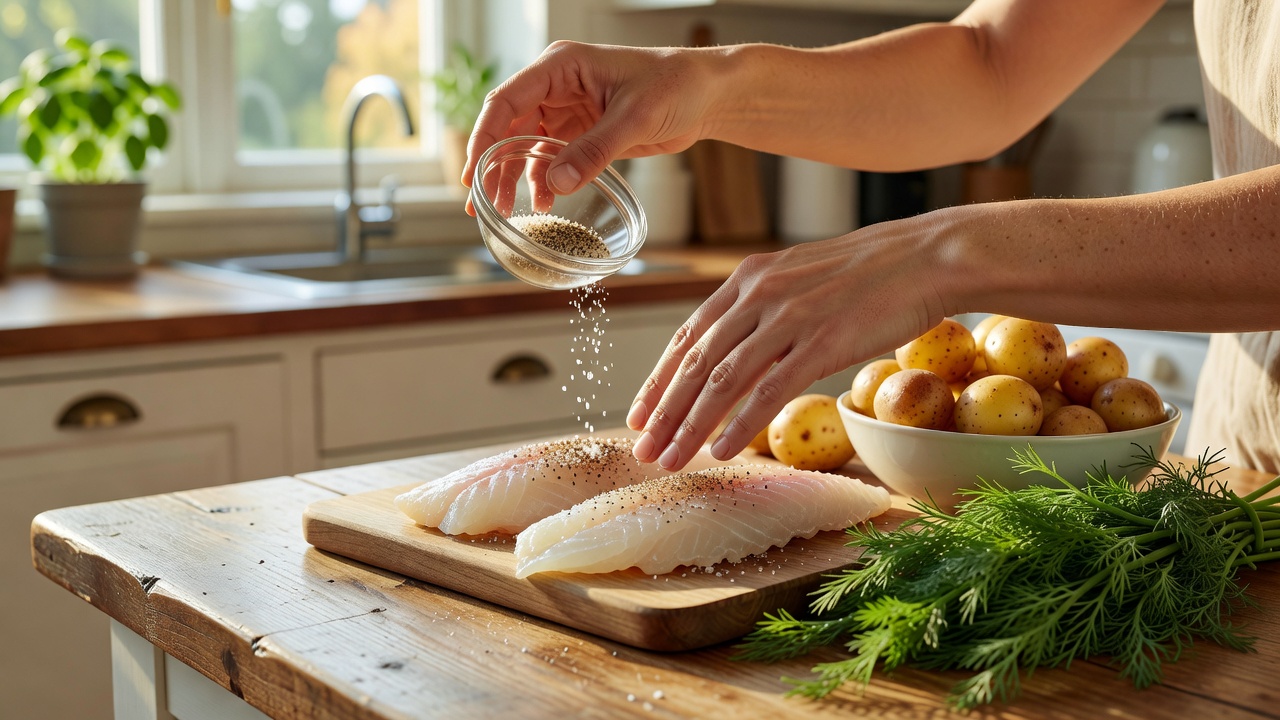
Start with the fish you can buy well
Cod, haddock, pollock and coley can all work in this recipe. Choose plain fillets of roughly similar thickness, so that one portion does not finish long before the others. Frozen fillets can be a sensible household choice, especially when you want to use a precise number of portions rather than a whole fresh pack.
Fish cooking around Scandinavia is not one uniform tradition. Norwegian fiskesuppe, Swedish gravlax and Danish fried plaice involve different ingredients and techniques. This guide is for a straightforward cooked supper. It is not a curing, raw-fish or pickled-herring method, and those methods need their own safety guidance.
Baked white fish, potatoes and dill sauce
The potatoes need longer than the fish. Roasting them first keeps the method simple and prevents dry fillets waiting for undercooked vegetables. Prepare the cabbage and sauce during that first stretch of oven time.
- Fish
- 4 plain white fish fillets, about 150 g each, fully thawed if frozen
- Potatoes
- 900 g potatoes, cut into 2 cm pieces
- Vegetable
- 400 g cabbage, finely shredded
- Oil & flavor
- 3 tablespoons rapeseed oil, divided; 1 lemon; black pepper and salt to taste
- Sauce
- 150 g plain yogurt, 2 tablespoons chopped dill and 1 teaspoon mustard, optional
A calm order of work
Use temperature rather than guesswork
Fillet thickness, starting temperature and the behavior of your oven all change cooking time. Opaque flesh that separates easily is a useful sign, but a thermometer is more dependable. Insert it into the thickest section, approaching from the side for a thin fillet. Clean it before and after checking.
Thaw frozen fish in a covered container in the refrigerator, not on the counter. Keep it below ready-to-eat food so that any drips are contained. For vacuum-packed fish, follow the package’s thawing instructions carefully; some products must be removed from their packaging before thawing. This recipe assumes thawed fish. If cooking directly from frozen, follow the product instructions and still verify the final temperature.
Wash hands and equipment after handling raw fish. Do not rinse raw fillets under the tap, where splashes can spread contamination. Check for pin bones with clean fingers before cooking, and take particular care when serving children. Cooking does not remove bones.
Substitute without losing the easy rhythm
Salmon can replace white fish, but its richness changes the balance of the plate. Keep the same temperature check rather than assuming an identical cooking time. For a fish-free supper, roast cooked white beans with a little oil in a separate dish until hot throughout, then serve with the same potatoes and cabbage. This is a different meal, not a nutritional equivalent.
Parsley and lemon can stand in for dill. An unsweetened plant yogurt can replace dairy yogurt if appropriate for your household; check the label for soy, nuts or other allergens. Fish, milk and mustard are relevant allergens in the original recipe. A substitution only solves an allergy problem when every affected ingredient and cross-contact risk has been considered.
Buy thoughtfully, keep leftovers promptly
Species name alone does not establish sustainability. Catch area and fishing method matter; look for credible information at the point of purchase. The Marine Conservation Society Good Fish Guide can help explain these distinctions. Advice will vary by market and fishery.
Refrigerate leftovers within two hours at 4°C / 40°F or below. Use cooked fish within three to four days, or freeze promptly. Reheat leftovers to 74°C / 165°F throughout, recognizing that the texture may become firmer. For pregnancy, children or specific health needs, consult applicable local fish-consumption advice; the FDA and EPA fish advice is one public reference.